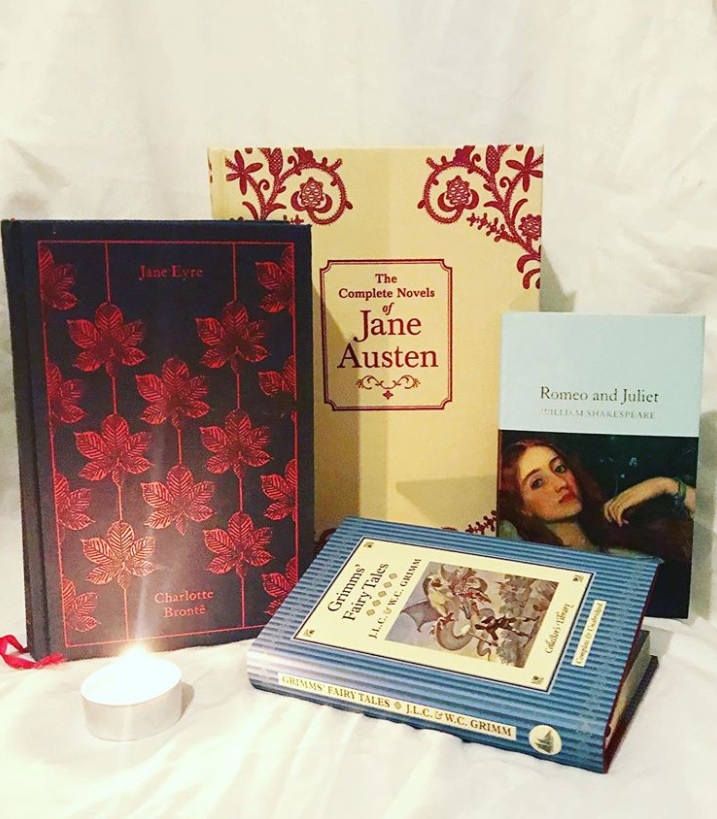
Charlotte Bronte, you wonderful, wonderful woman. I can’t help but wonder what she may have been like if she lived in the 21st century, she was so ahead of her time. I know some people say that Bronte wasn’t a feminist, but there is something definitely proto-feminist in her works;
Women are supposed to be very calm generally: but women feel just as men feel; they need exercise for their faculties, and a field for their efforts, as much as their brothers do; they suffer from too rigid a restraint, to absolute a stagnation, precisely as men would suffer; and it is narrow-minded in their more privileged fellow-creatures to say that they ought to confine themselves to making puddings and knitting stockings, to playing on the piano and embroidering bags. It is thoughtless to condemn them, or laugh at them, if they seek to do more or learn more than custom has pronounced necessary for their sex.”
Jane Eyre is a fantastic character, quiet, unassuming and yet completely sure of herself. She also has some of the best character development that I have ever read, towards the end of the novel she gains such self-confidence that you feel proud of her, despite knowing that she is fictional.
I also love that this is not just a mere romance novel. Although that is one of the most captivating elements of it. It’s about finding yourself, and knowing for yourself what you can and can not do. Jane learns through hardship that she can forgive those who wronged her and she knows that she can’t be with Mr Rochester due to her moral and religious beliefs, yet she can neither bring herself to marry St John. (For reasons that will be very clear when you read the novel.)
Mr Rochester was also a complex character, I found myself hating him on one page and then swooning the next. The fantastic thing is that, while you sympathize with him, you can’t quite bring yourself to thinking him just in his actions.
The Gothic element of the novel is just icing on an already delicious cake. Aside from the slightly over-flowery descriptions at points, I can find barely a fault in this novel.
I know some people find it abhorrent that Rochester losing his sight was the only way for them to become “equal” but I don’t think that was where Bronte was coming from. I have a few different theories as to why she took that route. Charlotte Bronte was, as most people of the era, a religious woman, and I think she had a more religious analogy/reason for Rochester’s blindness. In the Bible, Samson Judges 13:19–24, is a powerful man granted with supernatural strength by God, who had two weaknesses; distrustful women and vanity. After he tries to marry someone that his parents do not approve of he is blinded. Sound familiar? The only difference here is that Samson dies without his sight, here, however Rochester repents and is eventually rewarded by being able to – partially – see again.
Another reason for his blindness is plain and simple punishment. Not so much for locking up his wife (Bronte’s narration makes it clear that for the time this was considered the most humane thing to do, rather than sending Mrs Rochester to an asylum, though by modern standards it’s admittedly a little less chivalrous!) But for lying to Jane about it, and trying to trick her into bigotry – into sin. Jane leaves without marrying him and supposedly takes away his happiness and then his actual wife takes everything else.
Or, finally it could be that Bronte wanted to exchange Rochester’s physical sight for a more symbolic reason. Blinding him so that he may more clearly see his sins and God, gaining metaphorical sight before being awarded with physical sight once more. Either way, I enjoyed the vulnerability he had at the end of the book, enabling him to speak as plainly with Jane as she did with him without him having to resort to jealousy tactics or dressing up as a gypsy. (Why that scene is never included in film adaptations I don’t know! *Chuckles to oneself.*) Either way, I thought it was touching and fitting end.
Overall, I really enjoyed the whole experience of reading Jane Eyre. From the witty dialogue and romance, to the sheer intense descriptions (red room anyone?) I am one of many who places ‘Jane Eyre’ on their favourite’s shelf, and will continue to revisit it often!
Five stars!
“Jane, be still; don’t struggle so like a wild, frantic bird, that is rending its own plumage in its desperation.”
“I am no bird; and no net ensnares me; I am a free human being, with an independent will; which I now exert to leave you.”
– Rachel Writes x
What’s your favourite classic novel? Let us know in the comments below!
 The Talking Bookshelf